Hope Heals Camp: A Place Where Sorrow and Hope Walk Hand in Hand
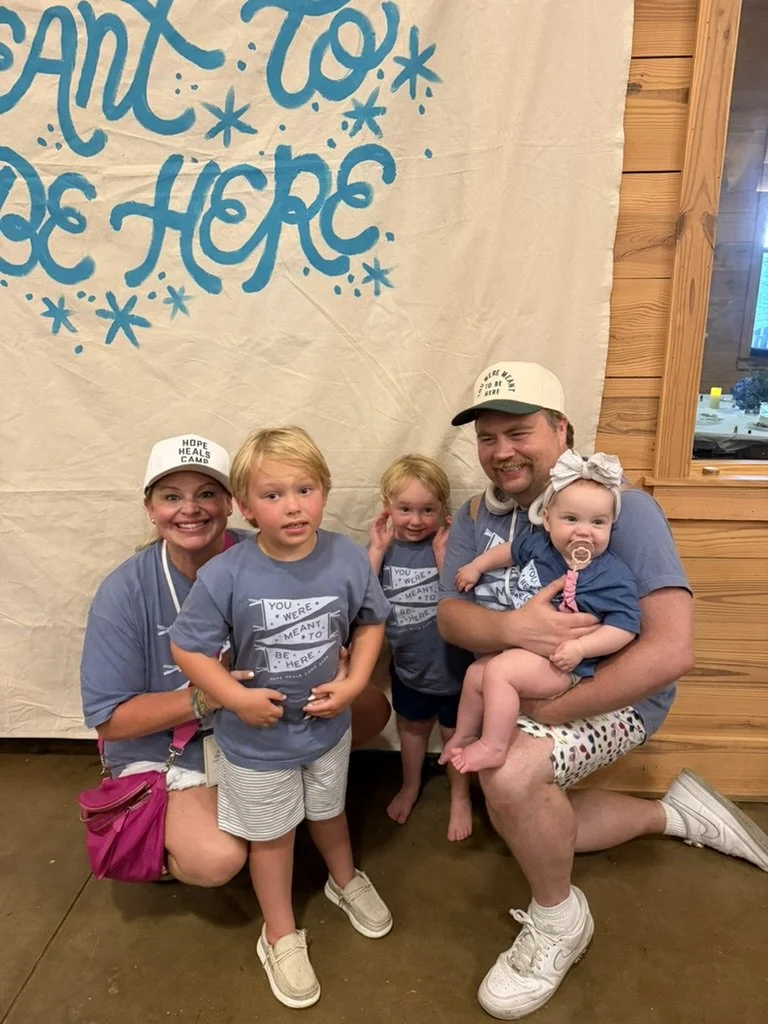
A few weeks ago, our family packed up the van and drove to Camp McDowell in Nauvoo, Alabama, for our very first Hope Heals Camp.
To be honest, I wasn't entirely sure what to expect.
As parents of a child with autism, we have become accustomed to carrying an invisible weight everywhere we go. We think about safety, sensory needs, transitions, meltdowns, therapies, wandering, food preferences, communication, and making sure every member of our family is seen and cared for. Even on vacation, there isn't much rest.
Hope Heals was different.
For one beautiful week, we entered a world intentionally designed for families like ours.
What Is Hope Heals?
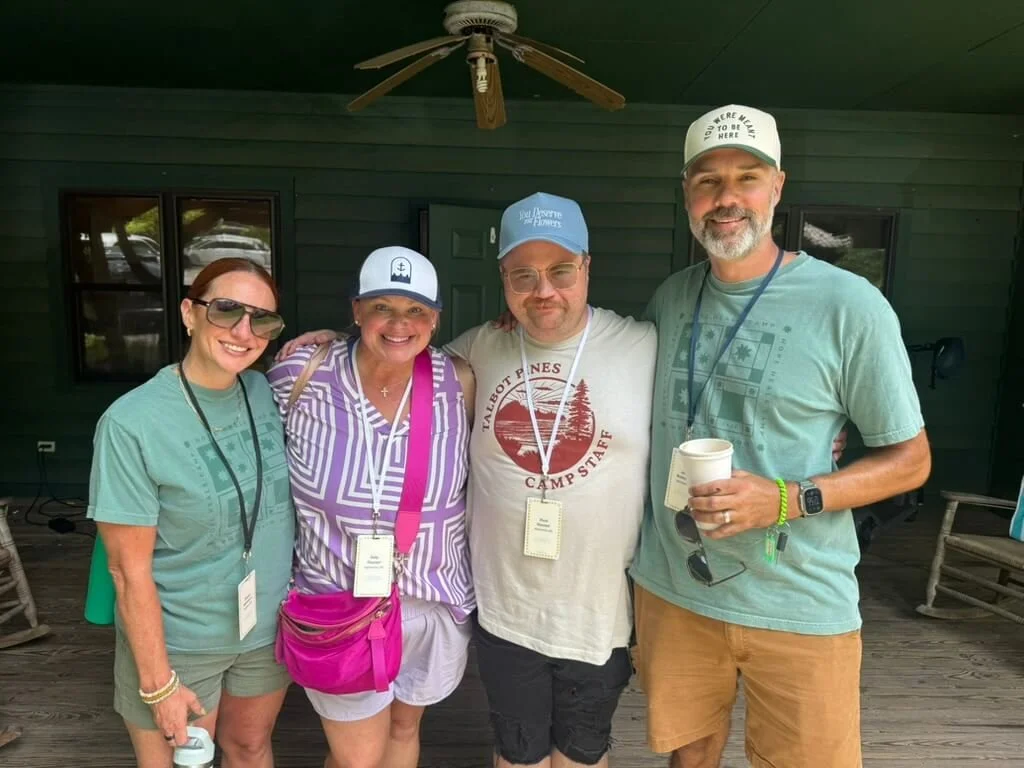
Hope Heals exists to create sacred spaces of belonging for families affected by disability, so they can experience the hope of Christ within an inter-ability community.
Founded by Katherine and Jay Wolf, the ministry offers retreats and week-long camps centered on rest, relationships, encouragement, and practical support for the entire family, not just the person with the diagnosis.
Katherine and Jay's story began in 2008, when Katherine suffered a catastrophic brainstem stroke at just 26 years old while their six-month-old son slept in the next room. She miraculously survived but lives with lifelong disabilities. For years they longed to return to the life they once knew, until God slowly showed them that disability wasn't someone else's story. It had become theirs.
In 2014, while speaking at a camp for families affected by disability, they realized they belonged not only on the stage but among the families themselves. When they were given the opportunity to lead that camp in 2017, they reimagined it into what it is today: a sacred space where people with disabilities of the body, heart, and mind are fully welcomed, fully seen, and deeply loved. Out of that journey, Hope Heals Camp was born, a reminder to families like ours that suffering is never the end of the story.
What Camp Actually Looks Like
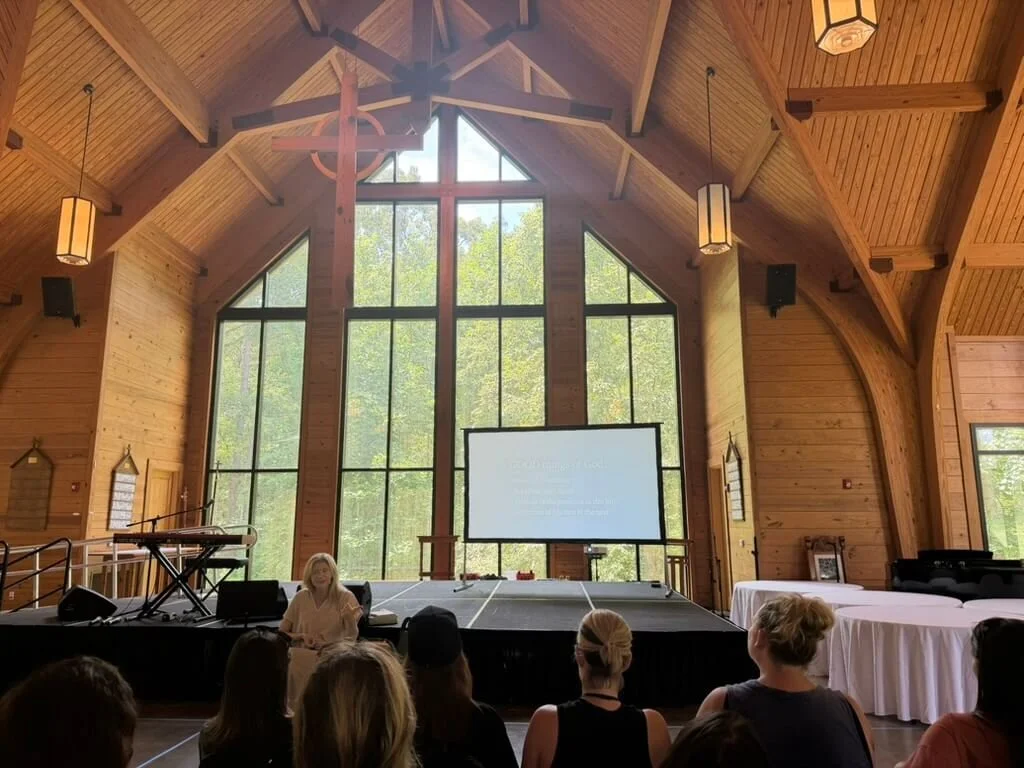
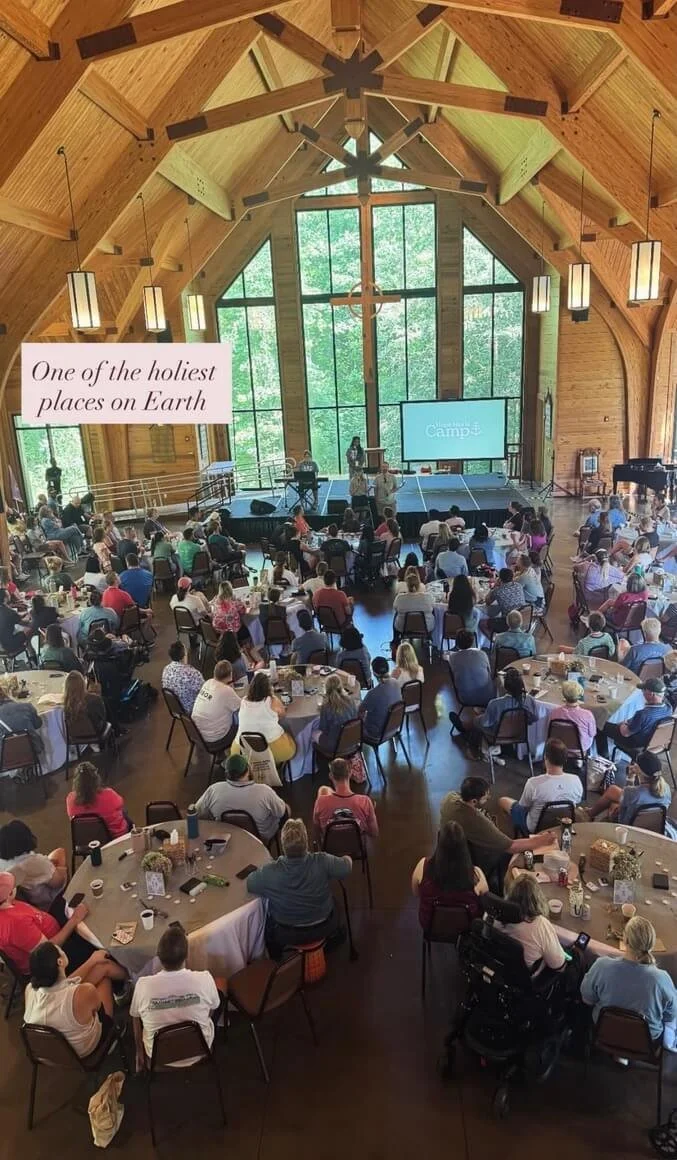
When people hear the word "camp," they often picture cabins and bunk beds.
Hope Heals is much more comfortable than that.
Families stay in private, hotel-style lodge rooms with their own bathrooms, along with access to communal kitchens, laundry, Wi-Fi, dietary accommodations, and golf carts to get everyone around camp with ease.
Every detail has been thoughtfully considered. There are sensory rooms for those who need a quiet place to regulate. A registered Medical Crew, a trained Behavior Crew, and a Personal Care Crew are all available throughout the week, lovingly assisting with diaper changes and other physical needs.
The pool is staffed with lifeguards during scheduled hours. One phrase I heard repeatedly throughout the week was essentially, "the schedule serves the camper, not the other way around." That philosophy alone felt incredibly refreshing.
I was also struck by how thoughtfully every role at camp is designed. There are Compassionate Companions, Squad Leads, Activity Crew, Hospitality Crew, Logistics Crew, Pastoral Crew, and more, an entire team where every person knows their role, and every role exists to help families experience rest.
One thing I especially appreciated was their commitment to safety: volunteers are never alone with a camper. Every camper is always accompanied by at least two volunteers. As a parent, that level of intentionality brought tremendous peace of mind.
But what impacted me most wasn't the logistics.
It was the people.
Compassionate Companions
Each person with a disability is paired one-on-one with a Compassionate Companion, known around camp simply as a "CC."
A CC isn't just a helper.
They're a friend.
They encourage, laugh, play, swim, celebrate victories, and simply show up.
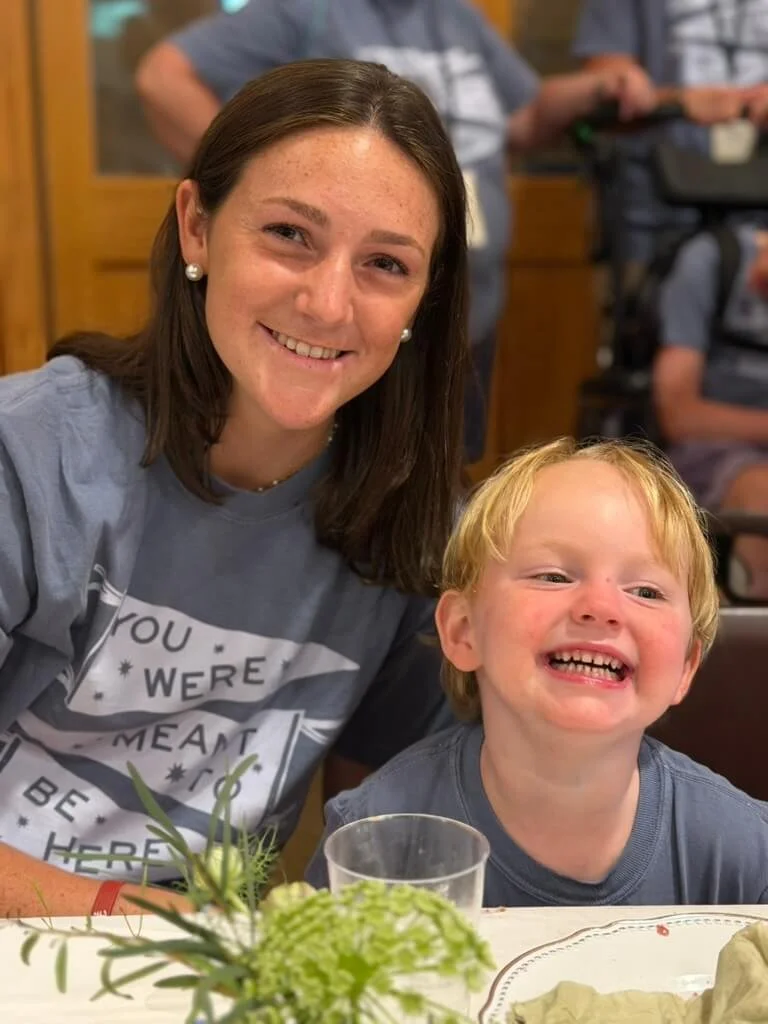
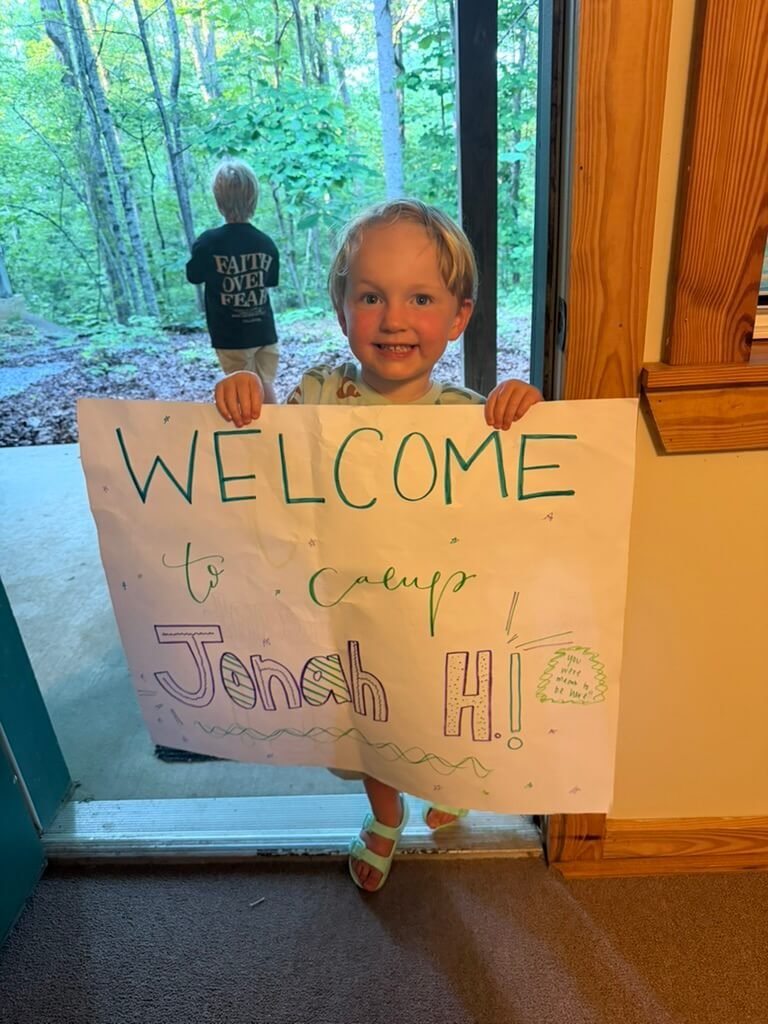
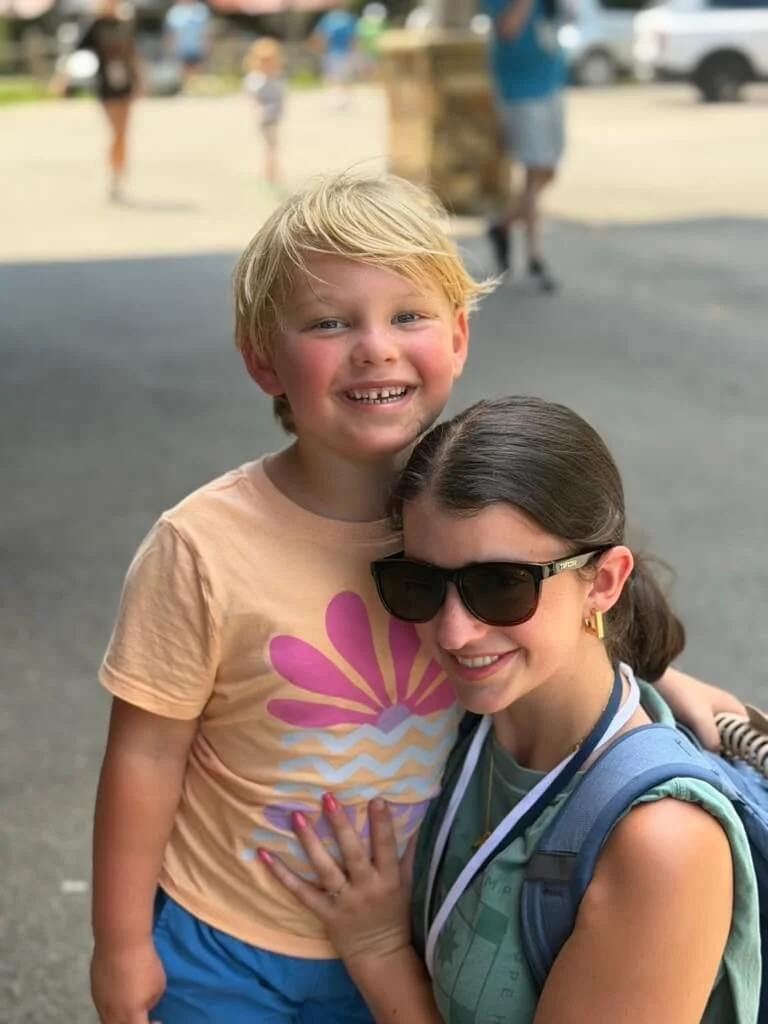
This year, each of our children had their own Compassionate Companion. Watching Harris run toward his counselor each morning with complete trust was one of the sweetest gifts I've ever experienced.
As a mom, there is something profoundly healing about watching someone else delight in your child.
Not tolerate them.
Not simply care for them.
Delight in them.
Our children weren't seen as interruptions.
They were celebrated.
Rest for the Entire Family
While our children spent the day with their Compassionate Companions enjoying activities, swimming, music, crafts, and recreation, parents gathered for worship, biblical teaching, and small group discussions.
For the first time in a long time, I wasn't constantly scanning the room. I wasn't wondering if Harris was safe. I wasn't waiting for someone to misunderstand him.
I could breathe.
I could worship.
I could simply be.
That kind of rest is hard to describe unless you've lived with the constant vigilance that disability often requires.
A Different Kind of Celebration
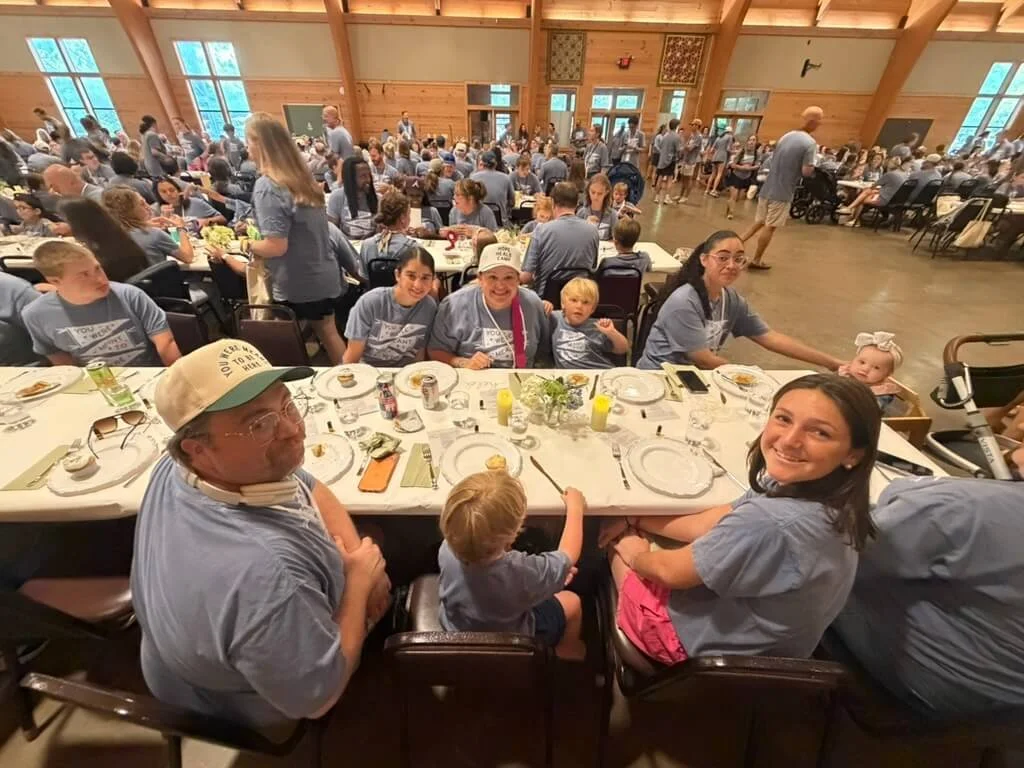
One evening, camp celebrated Christmas in July, complete with all the magic of the holiday in the middle of summer. Parents enjoyed special events created just for them, including catered meals, fellowship, and moments to simply breathe.
But one of my favorite evenings was the Talent Show, unlike any I've ever attended. Children and adults with disabilities took the stage doing exactly what they loved. Some sang. Some danced. Some smiled. Some simply stood on stage while hundreds of people cheered. There was no comparison, no pressure to perform perfectly. Every person was invited to share what they loved, and every performance was met with thunderous applause.
It wasn't about impressing anyone. It was about delighting in the unique gifts God has given every person.
It felt like a glimpse of Heaven.
The week ended with an inclusive worship service inspired by Luke 14, followed by a celebratory banquet and dance party. It was impossible not to think of the coming Kingdom, where every tribe, every tongue, every ability, and every story will gather around one table.
What Changed My Heart
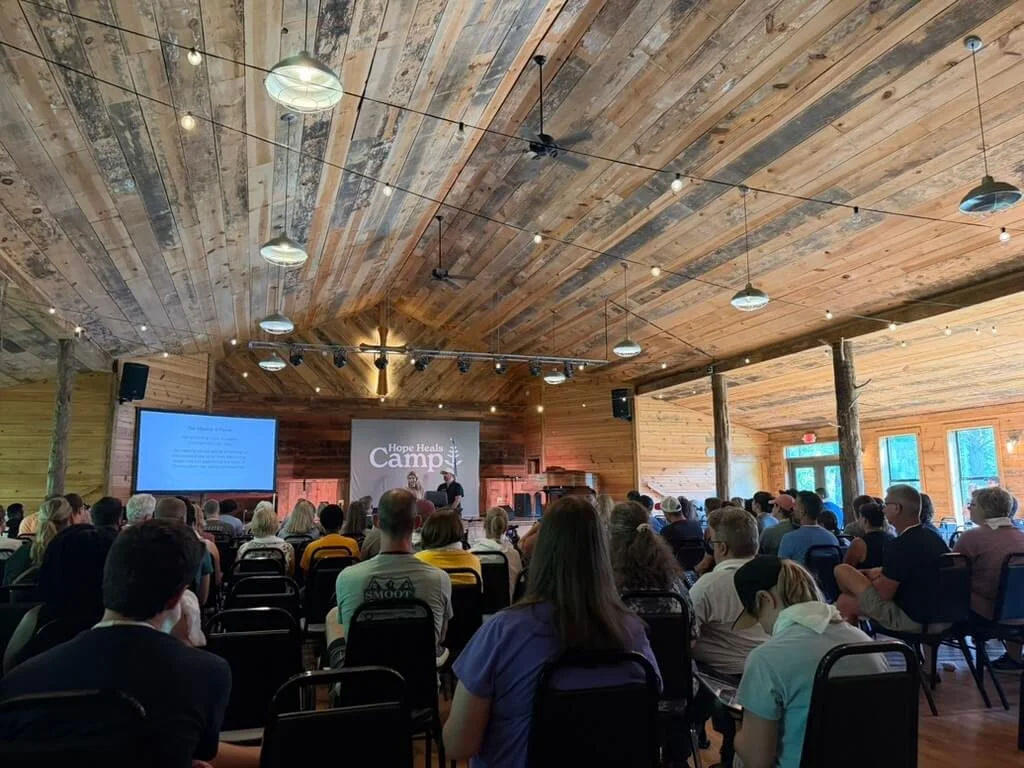
One sentence was repeated throughout the week.
Sorrow and hope can exist together.
Those words settled deep inside me. I realized I have often believed I needed to choose between grieving what is hard and celebrating what is beautiful.
God never asked me to choose.
Both can be true.
Another teaching challenged something many of us have unknowingly believed, that hardship is somehow God's punishment. Looking at John 9, when the disciples asked Jesus whose sin caused the man to be born blind, Jesus answered, "Neither this man nor his parents sinned... but this happened so that the works of God might be displayed in him."
Then we studied Luke 13, where Jesus rejects the assumption that tragedy means God is angry. We were reminded that condemnation is never God's character. Healing is.
God is good. Evil is evil. God does not need evil in order to accomplish good. Instead, He redeems what evil intended for destruction.
That truth changed something inside me. If a thought about God doesn't look like Jesus, it's not worth believing.
Learning to Lament
One of the most meaningful practices we learned was lament.
Lament isn't giving up.
Lament assumes the goodness of God.
It is honest enough to say, "This is hard."
And faithful enough to say, "I still trust You."
Those two realities can live together.
Perhaps that is what Hope Heals gave us most. Permission. Permission to grieve. Permission to laugh. Permission to hope. Permission to rest.
A Question I'll Keep Carrying
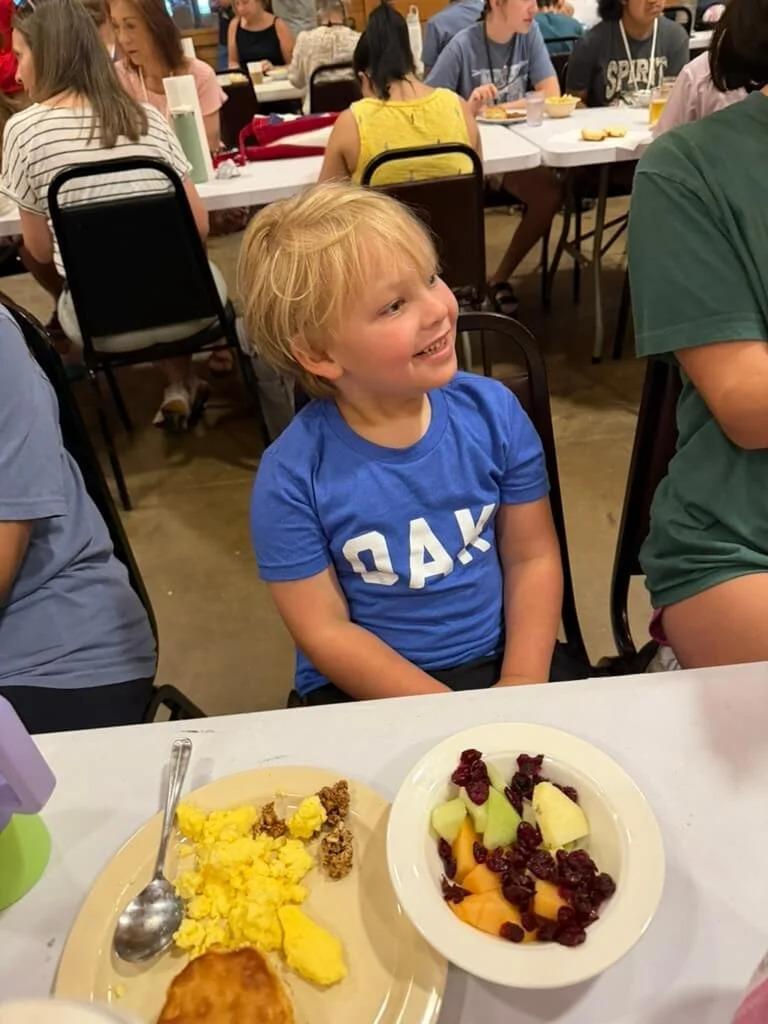
One question was asked during one of our small group discussions that I don't think I'll ever forget:
Where has God surprised you or revealed Himself in something difficult?
I immediately thought of Harris.
Autism has changed our family in countless ways. Some days are undeniably hard. But through Harris, God has made us slower. More compassionate. More dependent. More aware of people who often feel unseen. He has introduced us to extraordinary friendships, remarkable therapists, and now a community like Hope Heals.
I would never call autism easy.
But I can honestly say I've met Jesus there.
A Place for People Who Don't Have a Place
Katherine and Jay wrote something in a note to families that I think perfectly captures the heart of Hope Heals:
"We made a place for people who don't have a place."
As I looked around camp, I realized that wasn't just their mission statement.
It was our experience.
For one week, our family wasn't the exception.
We were home.
Until Next Year
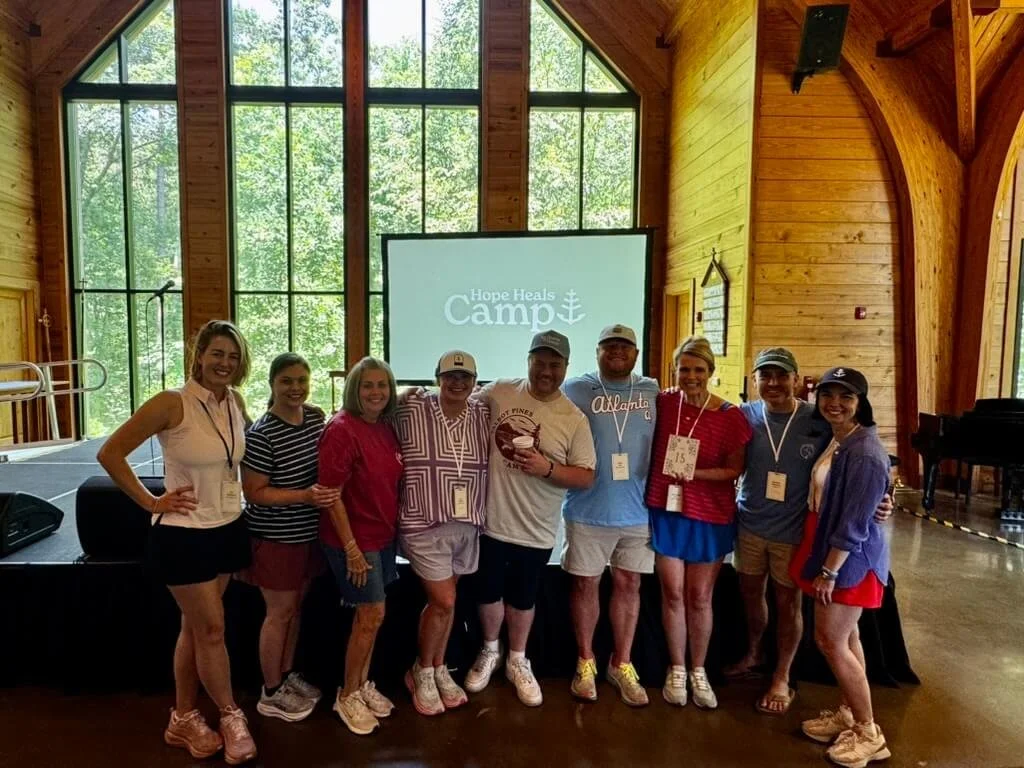
We left Hope Heals more rested than we've been in a long time. More understood. More connected. More hopeful.
Not because our circumstances changed.
But because we were reminded that we don't carry them alone.
Hope Heals didn't erase the hard parts of our story. It reminded us that God is faithfully writing a beautiful one.
And sometimes, the holiest places on earth look like golf carts, sensory rooms, cheering crowds, swimming pools, compassionate companions, and families learning together that sorrow and hope were never meant to compete.
They were always meant to walk hand in hand.
How You Can Get Connected
If you’re reading this and your family has been affected by disability, I cannot recommend Hope Heals Camp enough.
Applications for both campers and volunteers typically open each January. Families apply together because Hope Heals recognizes that disability affects the entire family—not just the person with the diagnosis. Due to the incredible generosity of donors throughout the year, the week-long camp experience is provided at no cost to camper families, with only a small registration fee to reserve your family’s spot if you’re accepted. Families are selected through an application process designed to serve as many people as possible.
If your family isn’t personally affected by disability, I would encourage you to consider serving as a volunteer.
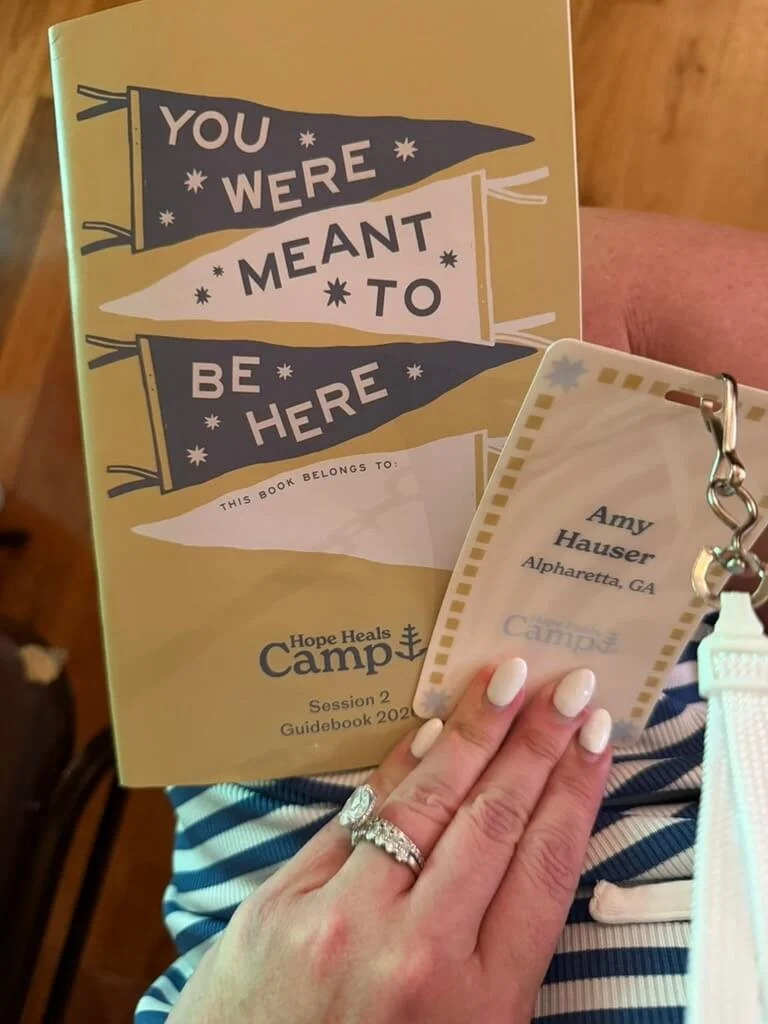
Hope Heals calls their volunteers “Compassionate Companions” and crew members, and they become the heartbeat of camp. Volunteers are paired one-on-one with campers or serve on teams like Hospitality, Activities, Medical, Behavior, Logistics, and Personal Care. No prior disability experience is required—just a willing heart, flexibility, and a commitment to love people well.
One of the most unique parts of Hope Heals is that volunteers actually pay or fundraise to serve. Their donation covers their own camp expenses and helps offset the cost for camper families so that families like ours can experience a week of rest, encouragement, and community regardless of their financial circumstances. Every volunteer receives fundraising tools after being accepted, making it possible for friends and family to partner in this mission.
Whether you’re looking for hope as a family navigating disability or you’re searching for a meaningful way to serve, I encourage you to visit Hope Heals. Read Katherine and Jay’s story, sign up for their email updates, pray for this ministry, volunteer, donate, or apply for camp.
Our family arrived carrying the weight of everyday life.
We left carrying something different.
Hope.
And my prayer is that many more families will discover this beautiful place where sorrow and hope truly can coexist.